
10-Year Treasury Nears 5%: Opportunities and Risks to Investors
September 14, 2026
 By Dustin Saia
Securities Analyst
The 10-year U.S. Treasury yield continued its climb this week, approaching the 5% threshold. On September 10, yields briefly reached 4.98% before closing at 4.95%, their highest level since 2023. This move reflects a changing economic and interest-rate environment with significant implications for markets and investors.
The 10-Year in Perspective
Treasury yields rose broadly this week, but the 10-year has taken center stage given its influence across borrowing costs, asset valuations, and financial markets. A 5% yield has been uncommon in recent decades, last reached in 2023 amid aggressive Fed tightening and, before that, in 2007 prior to the Great Financial Crisis. However, a longer-term view puts today’s level in perspective. The 10-year averaged 5.70% since 1958 and peaked at 15.84% in 1981. While not unusual from a historical perspective, the speed of the recent move and the forces driving it make the current rise in yields particularly noteworthy.
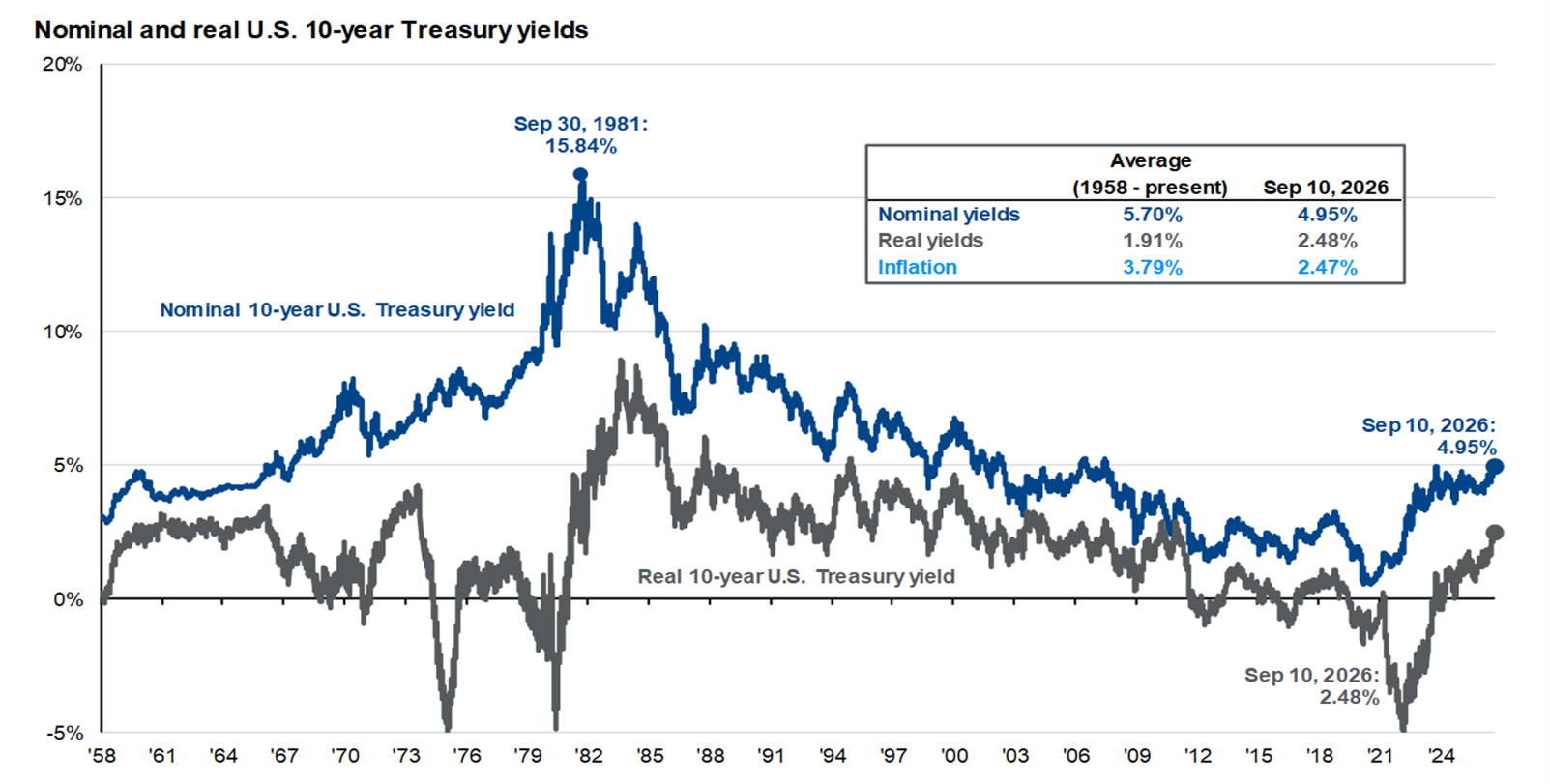
Source: J.P. Morgan Guide to the Markets, Data as of 9/10/26
What's Driving Yields Higher?
Several forces are behind the recent rise in yields, many of which have been recurring themes throughout the year. Geopolitical concerns remain at the forefront, as escalating tensions in the Middle East push oil prices back toward $100 a barrel, adding to inflationary pressures. The August Consumer Price Index (CPI) showed consumer prices rose 3.4% from a year ago, while gasoline prices rose 3.9% during the month and accounted for more than one-third of the monthly increase in headline inflation. With inflation still above the Federal Reserve’s target, markets are favoring a rate hike at the Federal Reserve’s upcoming September meeting.
At the same time, persistent fiscal deficits and record government debt are increasing Treasury issuance and putting additional pressure on long-term yields. Together, these factors increased the compensation investors demand to hold longer-term government debt.
What Higher Yields Mean for Investors
In the short term, higher 10-year Treasury yields will put upward pressure on borrowing costs. Mortgage rates, corporate borrowing, and government financing costs are all influenced by Treasury yields, making financing more expensive as rates rise. Longer term, the effects are more nuanced. Higher rates can slow economic growth and pressure equity valuations, while persistent government borrowing could place further upward pressure on yields. For investors, however, higher yields also create more attractive opportunities for fixed income returns and reinvestment.
While the rise in yields creates near-term headwinds for borrowers and markets, it also provides investors with more attractive opportunities in fixed income. As markets adjust to a potentially higher-rate environment, the level and direction of Treasury yields will remain an important factor for investors to watch. If you want to know how these changes may impact your portfolio, please reach out to your advisor today. Your success matters.