
Is Mixing Politics with Your Investment Portfolio a Good Idea?
October 19, 2026
 By Eric Johnson
Securities Analyst
As evident from the countless political ads we've all been subjected to over the past few months, midterm elections are officially upon us. Election season often creates anxiety among investors and leaves some wondering whether they should adjust their portfolios based on a potential shift in power in Washington. The short answer? Probably not.
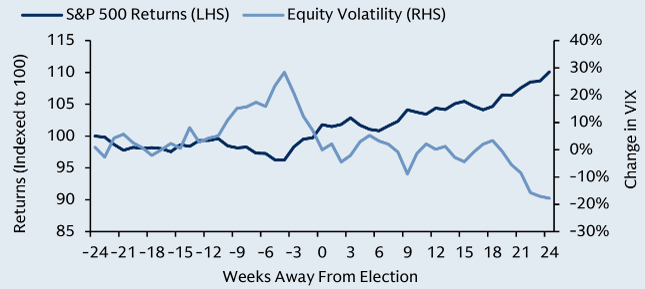
The chart below illustrates how stock market volatility typically rises in the weeks leading up to an election. It typically peaks about a month beforehand then falls sharply once the results are known. Historically, markets are more concerned with uncertainty than the election outcome itself. Once investors know the results, markets tend to move on quickly, regardless of the outcome.
Source: Goldman Sachs
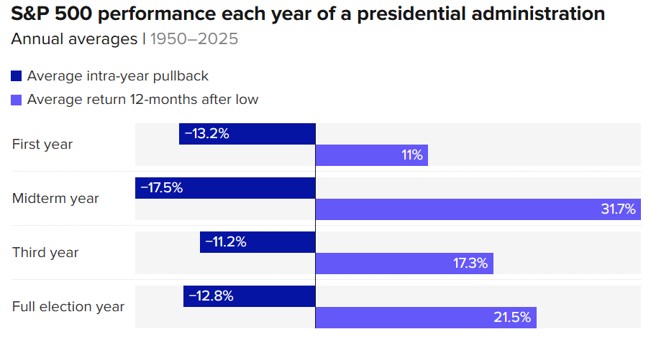
It's true that stocks historically experienced greater volatility during midterm election years. As the chart below shows, the S&P 500 has averaged an intra-year decline of nearly 18% during these periods. This year, however, U.S. large-cap stocks have largely bucked that trend, with the index experiencing a maximum drawdown of 9% so far.
Does that mean we're due for more volatility in the fourth quarter? Maybe. Markets rarely send invitations before they become turbulent. Even so, history suggests the final quarter of midterm years is generally a favorable period for investors. Since 1946, the S&P 500 delivered an average fourth-quarter return of 6.6% during midterm years and finished higher 84% of the time. Even when volatility does emerge, the rebound is often worth the ride. In fact, midterm election years produced the strongest average returns for the 12 months following a market bottom, at nearly 32%.
 Source: CNBC
Perhaps even more noteworthy, every midterm election since 1946 is followed by a positive one-year return for the S&P 500, with an average gain of approximately 14%. While history never guarantees future results, it does provide a helpful reminder that markets consistently look beyond election headlines and remain focused on economic fundamentals, corporate earnings, and long-term growth.
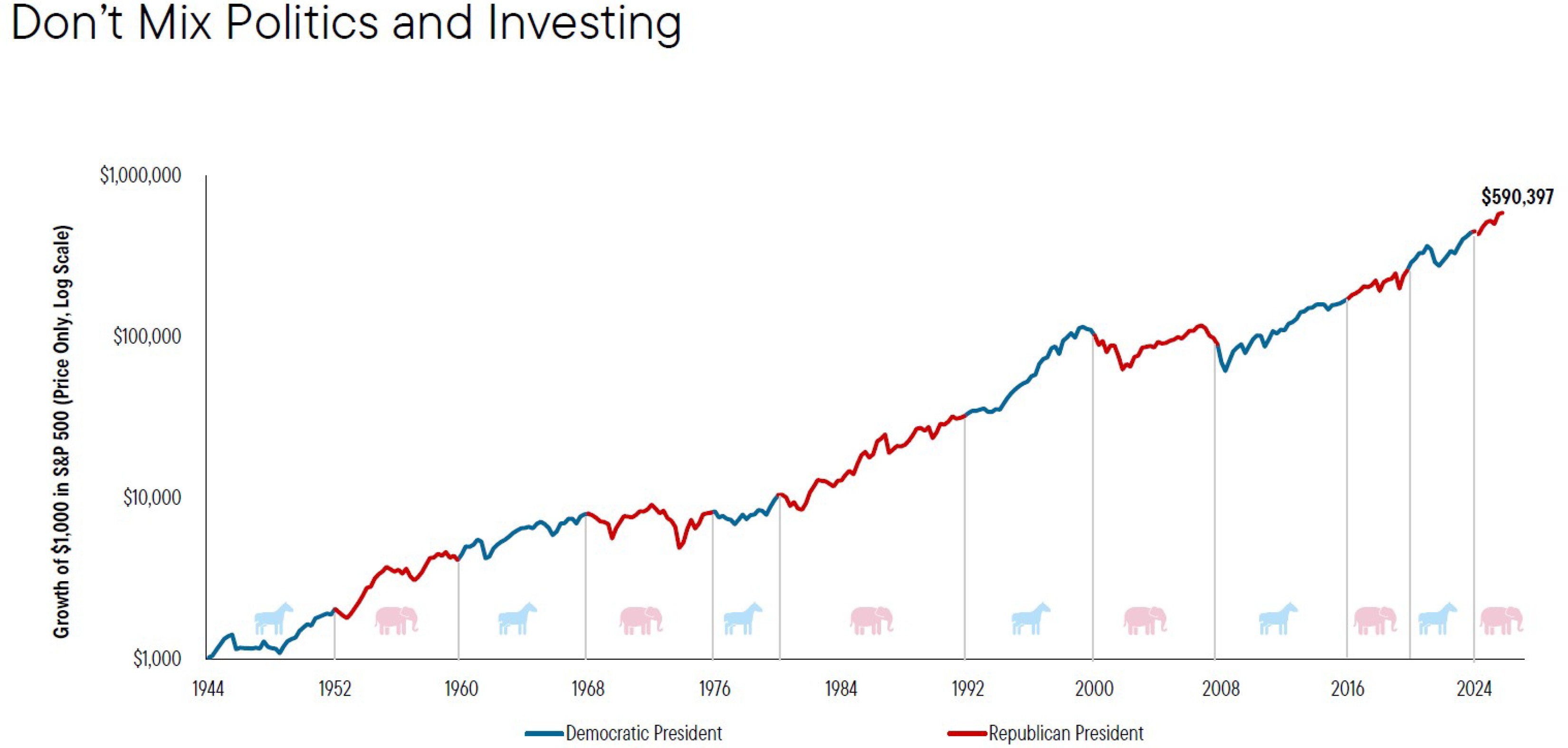
The chart below reinforces another timeless investing lesson: regardless of which party wins an election, patient investors have historically been rewarded for staying invested and maintaining a long-term perspective.
Source: Franklin Templeton
Ultimately, successful investing isn't about predicting election outcomes. It's about remaining disciplined through periods of uncertainty. Political developments often dominate headlines and influence short-term market sentiment. However, history shows long-term investment returns are driven more by economic growth, corporate profits, innovation, and productivity than by which party occupies the White House or controls Congress. If you have questions about your portfolio or the market, please reach out to your advisor. Your success matters.