
School Costs Are Climbing-How to Best Be Prepared
August 10, 2026
 By Ted Hanson
Portfolio Manager
Just like that, summer is already winding down, and school shopping lists are being made. Whether you are sending your little one to their first year of school or watching them head off to college, it is hard to believe how fast they have grown. Shopping for new clothes, backpacks, and school supplies is part of the excitement that comes with a new school year. Unfortunately, so is the bill that follows. It is impossible to ignore the effects inflation on the cost of everything from pencils to shoes, and certainly tuition. That is why planning ahead for these expenses becomes vital for many households.
Tuition Costs Outpacing Inflation
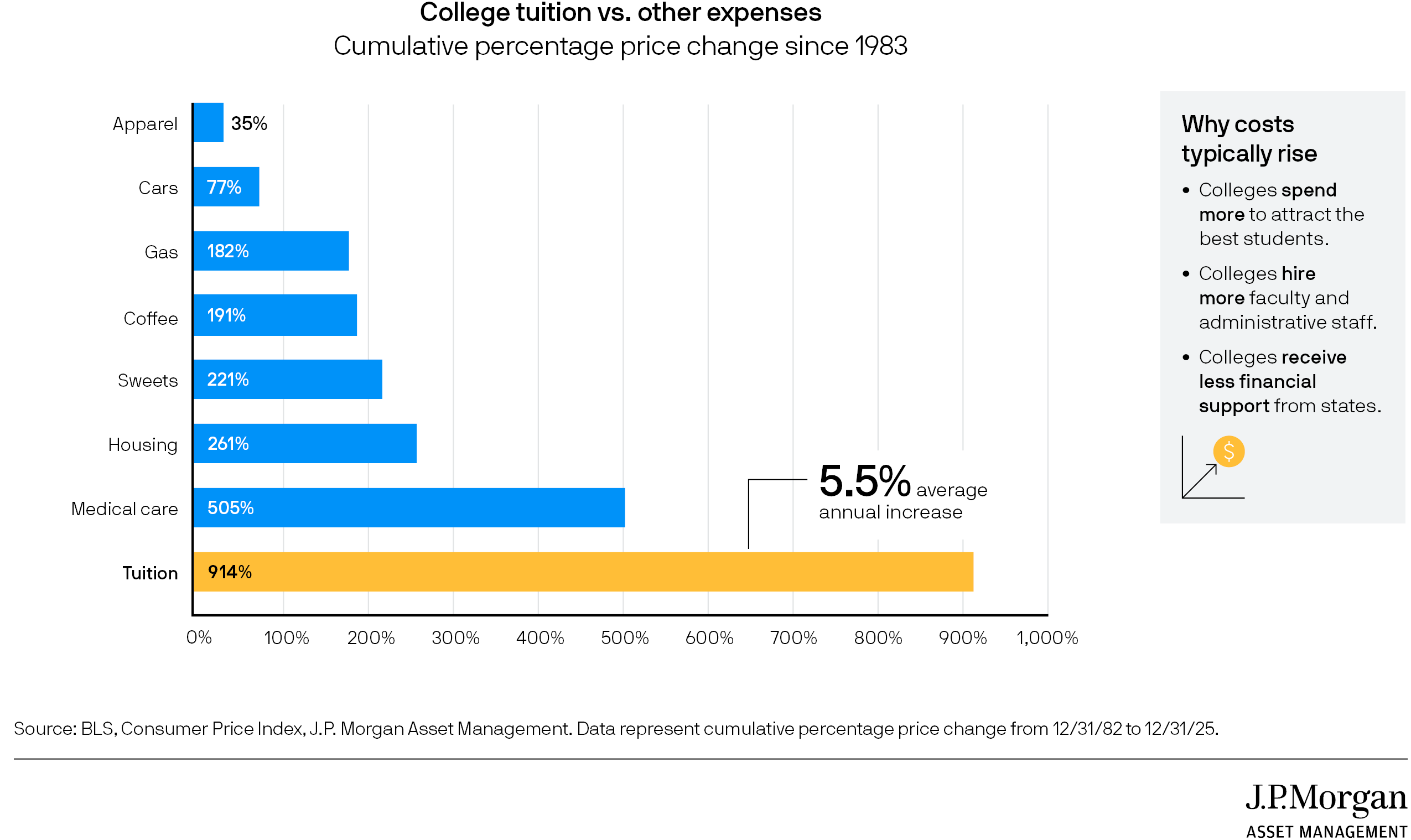
The chart below, provided by JP Morgan, highlights changes in prices for many households over the past 43 years. The increase in tuition costs is particularly notable, averaging 5.5% per year, much higher than the Fed’s target of 2% general inflation for the economy. It is no secret how expensive college has become, costing on average over $110,000 for tuition and other expenses for a four-year degree at a public college. While college is often the largest education expense families face, many also budget for private school, extracurricular activities, tutoring, or other expenses along the way. Now is a great time to review current costs, consider potential future expenses, and plan for what may lie ahead.
Prepare for Future Expenses
Fortunately, there are many ways to save for future education expenses, but deciding which approach is best can feel overwhelming. 529 education plans are a popular vehicle for those saving for education expenses because they combine tax advantages with flexibility. These plans are state-sponsored, tax-advantaged plans. Meaning contributions are made using after tax dollars, grow tax-free, and eligible for tax-free withdrawals on qualified expenses such as college tuition, room and board, or even K-12 tuition (up to $20,000/year). Other great features for 529 plans include flexibility in beneficiaries and potential to roll unused assets into a Roth IRA in the future (subject to certain requirements and limitations). Even if a child doesn’t attend college, the built-in flexibility allows families to adapt without losing the account’s value.
There are a variety of other options for saving, such as custodial accounts, Coverdell Education Savings Accounts, taxable brokerage accounts, Roth IRAs, etc. All these vehicles have different features and restrictions regarding contribution limits, tax implications, ownership structure, and impacts on an individual’s financial plans. As your trusted advisor, we would welcome an opportunity to explain the different options and how they may affect your individual circumstances.
Saving Early is Key
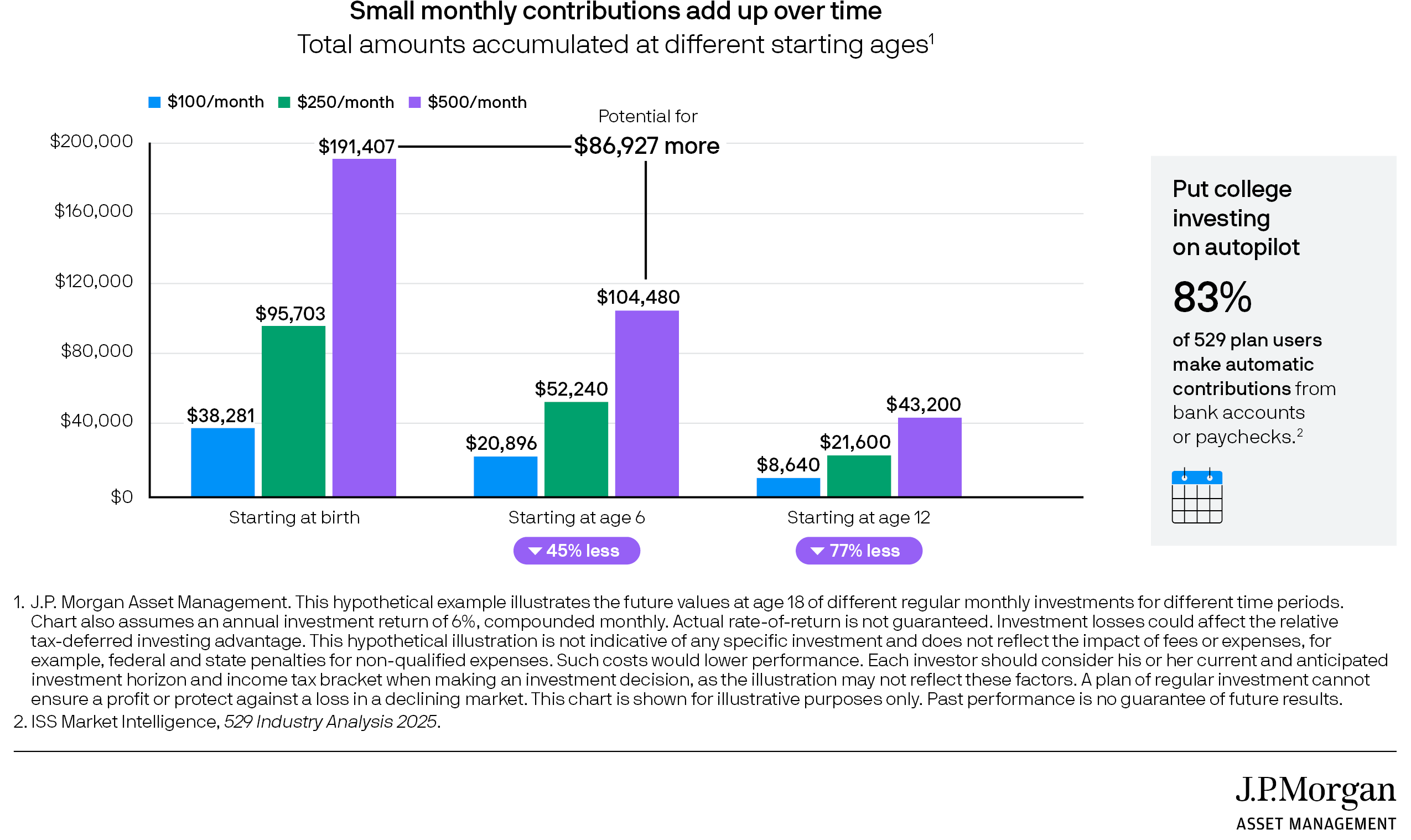
While the type of savings vehicle utilized is important, starting early is key. The power of compounding is strong; saving small amounts over long periods of time can be an effective way to accumulate meaningful savings. The chart below, again provided by JP Morgan, visualizes the importance of starting early. There are substantial differences in the possible accumulated values based on how soon you begin. For those that may have delayed saving, don’t be discouraged. Even setting aside a few dollars each month can grow into a valuable education fund over time. As Warren Buffett famously said, “The best time to invest was yesterday; the second best time is today.”
While accumulating meaningful savings can feel overwhelming and unachievable, it is possible. Financial planning isn't just about preparing for large expenses; it's about creating opportunities. Whether you're buying that first Bluey backpack, helping with a first car, or celebrating a college graduation, thoughtful planning today can make tomorrow's milestones a little less stressful and a lot more rewarding. We are here to help you build a plan that supports your family's goals, today and for the future.
If you'd like to discuss your family education savings strategy and financial goals we'd be happy to help.