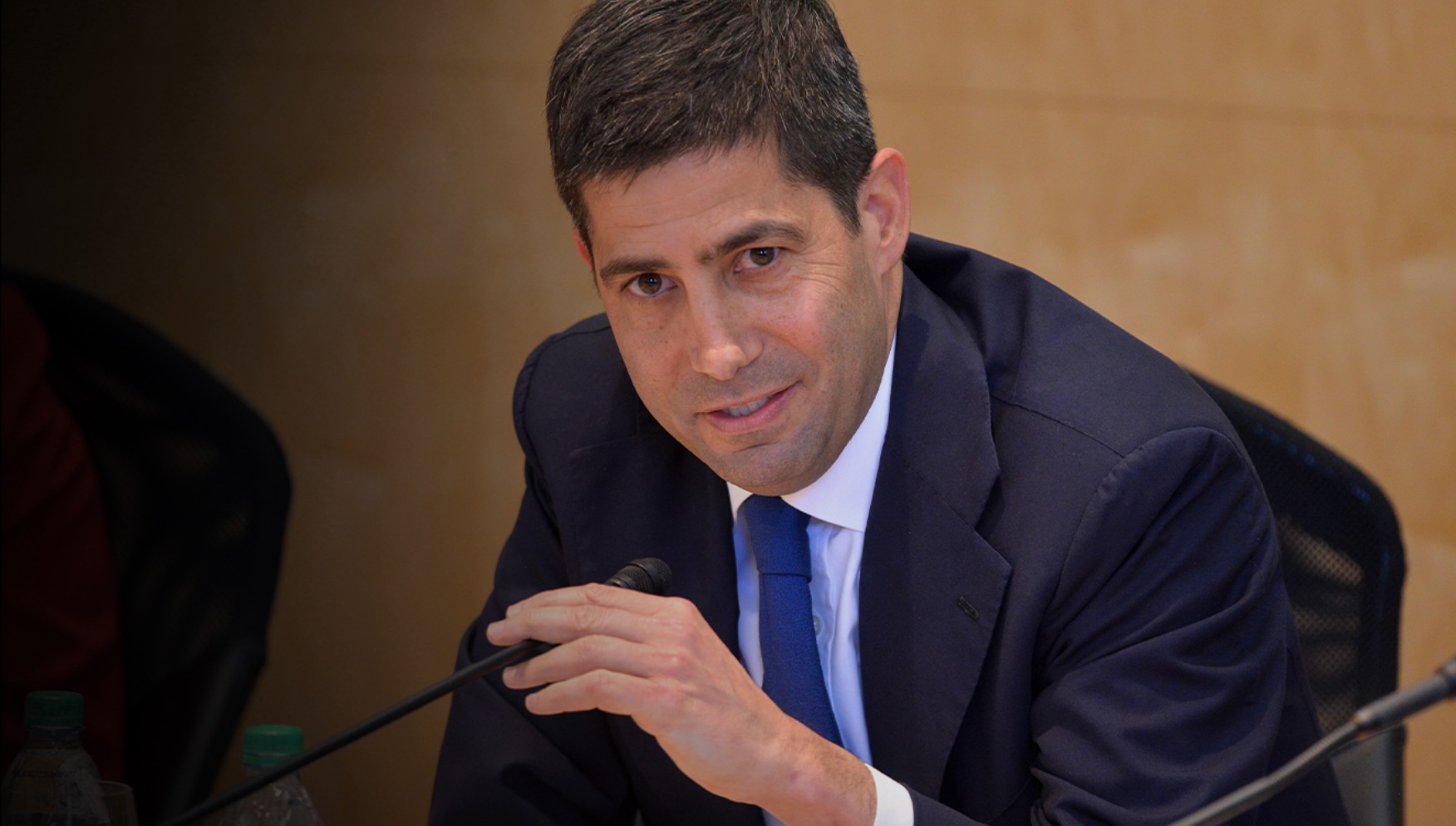
Who Is Kevin Warsh? The Next Federal Reserve Chair Explained
February 9, 2026
 By Eric Johnson
Securities AnalystThe search for the next Federal Reserve Chair has come to an end. President Trump has selected Kevin Warsh to succeed Jerome Powell, whose term expires in mid-May. Until then, investors will be closely watching for clues about the priorities and policy framework Warsh may bring to the central bank. This raises the question: “Who is Kevin Warsh?”
Warsh’s Career
Born in New York, Warsh earned his undergraduate degree from Stanford University, where he studied under Milton Friedman, the famed economist whose influence is evident in Warsh’s monetary views. He later obtained a law degree from Harvard Law School before beginning his career as a Wall Street banker at Morgan Stanley. After seven years at the firm, Warsh joined President George W. Bush’s team of economic policy advisors in 2002. In 2006, Bush nominated him to the Federal Reserve Board of Governors, making Warsh the youngest Fed Governor in history at just 35 years old.
Warsh had little time to savor the achievement. Soon after his appointment, the U.S. economy was thrust into the Great Financial Crisis. In response, the Federal Reserve aggressively cut interest rates and introduced a new policy tool: quantitative easing. This tool involves the Fed purchasing large quantities of financial assets, typically U.S. government debt, to inject liquidity into the financial system and push down long-term interest rates.
Warsh grew increasingly uncomfortable with this approach. He warned that quantitative easing significantly expanded the money supply, risked future inflation, distorted financial markets, and reduced fiscal discipline by encouraging large government deficits. In 2011, following the announcement of a second round of quantitative easing, Warsh resigned from the Board of Governors.
After leaving the Fed, Warsh became a fellow at Stanford’s Hoover Institution and later an advisor to billionaire investor Stanley Druckenmiller. In 2017, Warsh was considered as a potential successor to Janet Yellen as Fed Chair, but President Trump ultimately selected Powell, reportedly concerned about Warsh’s reputation for favoring tighter monetary policy. Nearly a decade later, Warsh appears to have secured the role that once eluded him.
Warsh’s Views on AI, Growth, and Fed “Mission Creep”
In recent years, Warsh has expressed optimism artificial intelligence could meaningfully boost productivity and potential GDP growth, creating room for lower interest rates without reigniting inflation. At the same time, he has criticized the Federal Reserve’s “mission creep,” arguing the institution has grown beyond its appropriate size and scope. Quantitative easing, in his view, exemplifies this overreach.
Warsh’s nomination comes during a turbulent period for the central bank. Earlier this year, the Department of Justice served grand jury subpoenas to the Federal Reserve related to statements Powell made before the Senate Banking Committee concerning renovations to Fed buildings. In response, some lawmakers have threatened to withhold confirmation of a new Fed Chair until the case against Powell is dropped, arguing the investigation undermines the Federal Reserve’s independence.
What Warsh’s Leadership Could Mean for Investors
Assuming Warsh is confirmed, he believes the Fed may have room to lower short-term interest rates, while simultaneously advocating for a smaller balance sheet. Currently, the Fed’s balance sheet stands near $6.6 trillion, roughly two-and-a-half times its size when Warsh resigned 15 years ago. Regardless of one’s views on Warsh, it is important to remember that the Fed Chair is one of twelve voting members on the Federal Open Market Committee. The Chair’s primary responsibility is to build consensus among the members and clearly communicate the Fed’s objectives to the public. Many financial leaders have expressed confidence Warsh will preserve the Federal Reserve’s independence and remain committed to its dual mandate of price stability and maximum employment. If you have questions about how a change in Federal Reserve leadership could affect your investment strategy, please reach out to an advisor. Your success matters.