
A Closer Look at Corporate America's Strong Report Card
August 17, 2026
 By Eric Johnson
Securities Analyst
In recent weeks, U.S. equities have marched to fresh all-time highs, powered by a strong second quarter earnings season. As of a week ago, 88% of S&P 500 companies had reported results, and 86% of those companies exceeded analyst earnings-per-share (EPS) estimates. That's well above the five- and ten-year averages of 78% and 76%, respectively, and would mark the highest earnings beat rate since the second quarter of 2021. At first glance, that's an impressive report card. But as investors, we've learned that the headline is rarely the complete story. A closer look at this quarter's results reveals a few important details lurking beneath the surface.
Where the Numbers Are Coming From
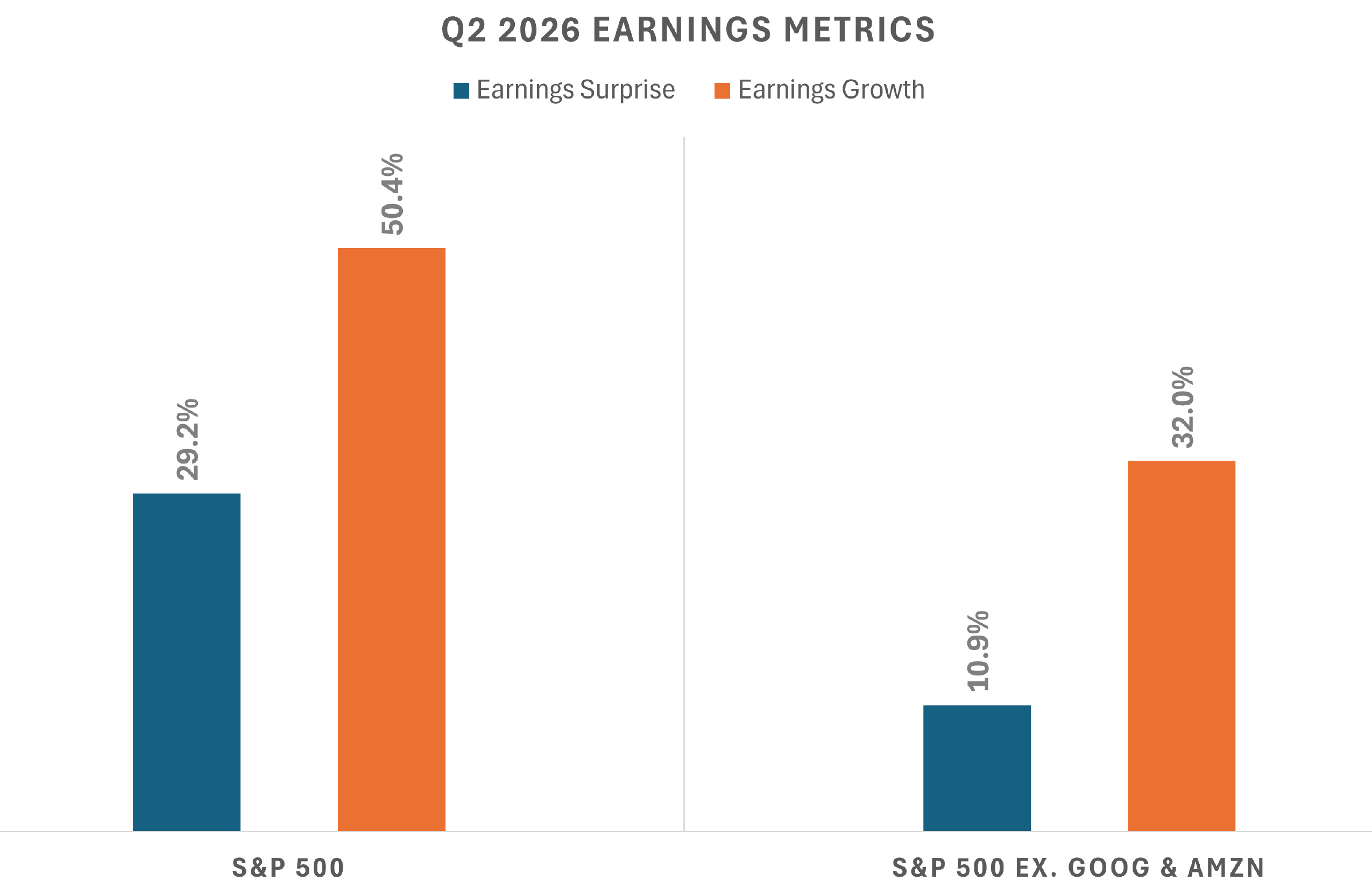
As shown in the chart below, S&P 500 companies have reported earnings that are 29.2% above analyst estimates and are tracking 50.4% blended earnings growth year over year. Those are eye-popping numbers. However, a sizable portion of the upside came from just two companies: Amazon (AMZN) and Alphabet (GOOG), Google's parent company. In both cases, a significant share of quarterly profits came from "other income" rather than their core businesses. This category accounted for 71% of Alphabet's profits and 66% of Amazon's, largely driven by their investment gains in companies SpaceX and Anthropic. Strip out those paper gains, and the S&P 500's earnings surprise margin falls from 29.2% to 10.9%, while earnings growth drops from 50.4% to 32.0%. Still strong by historical standards, but a useful reminder that a few very large companies can dramatically influence the headlines.
Source: FactSet
Energy is a Contributing Factor
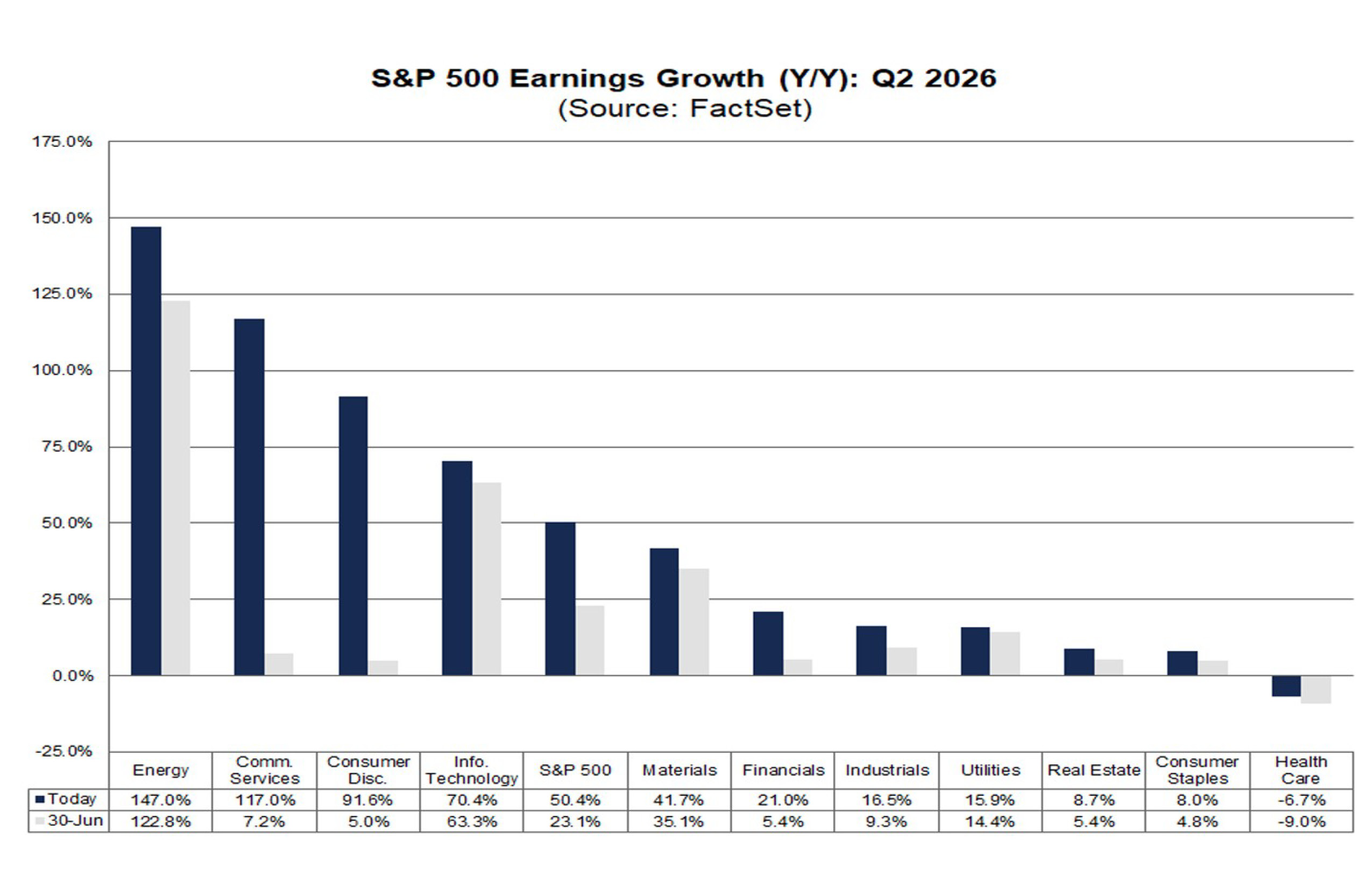
Furthermore, the energy sector deserves its own mention. Energy companies posted an impressive 147% earnings growth rate in the second quarter, nearly three times the broader market average and the strongest performance among all 11 sectors. The explanation is straightforward: higher oil prices. The average price of oil during the second quarter of 2026 was $92.55 per barrel, compared to $63.68 during the same period last year. Geopolitical tensions involving Iran helped push prices higher, creating a major tailwind for energy producers. Of course, commodity markets rarely stand still. If Middle East tensions continue to ease and oil prices retreat from recent levels, that earnings tailwind could become a headwind in future quarters.
Source: FactSet
Tariff Refunds Give a Bump
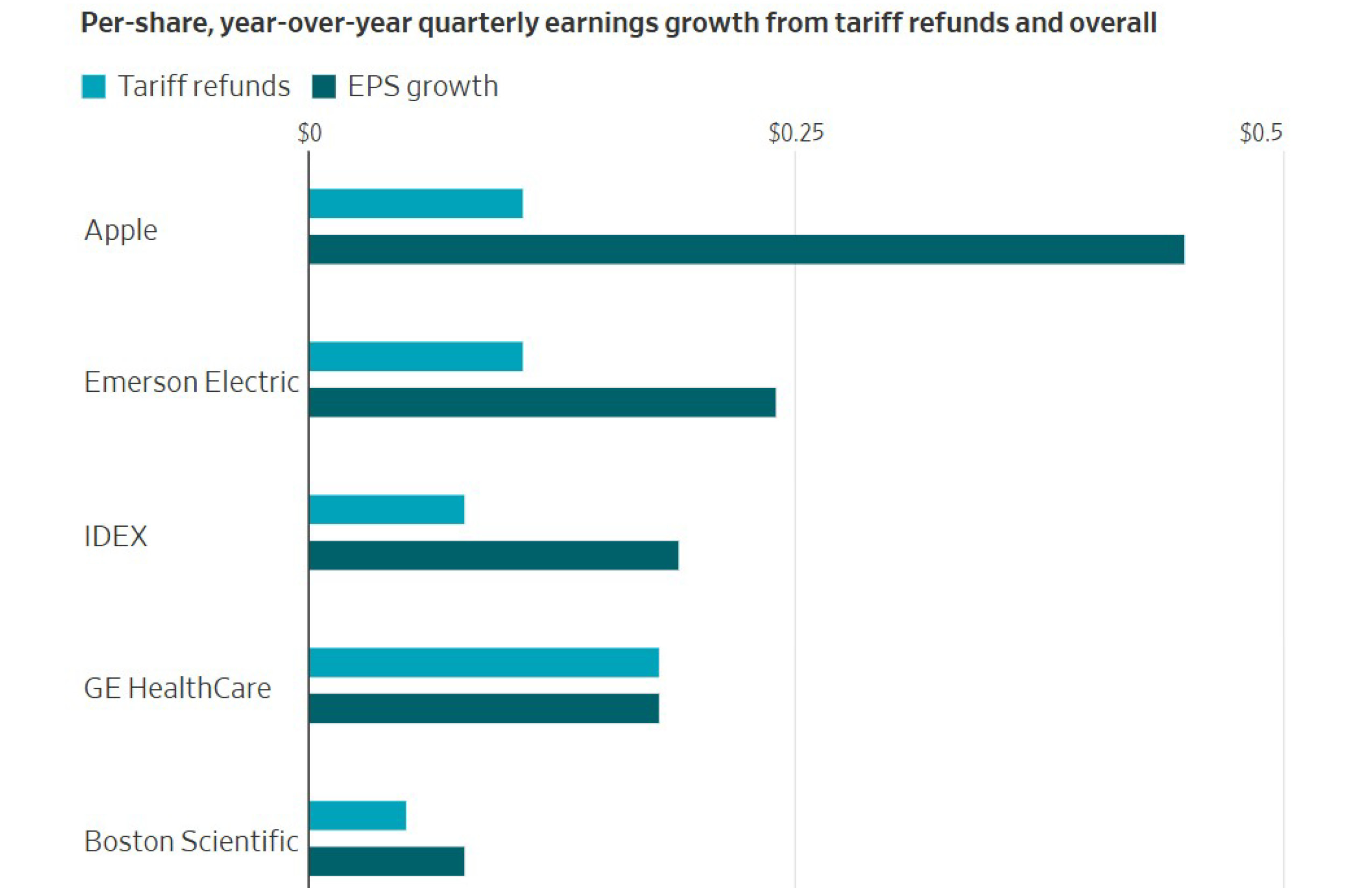
Another wrinkle this earnings season involves tariff refunds. Following the Supreme Court's ruling against several of President Trump’s tariffs earlier this year, many companies became eligible to receive reimbursements for tariff costs they previously recognized. As the chart below illustrates, these refunds provided a meaningful lift to earnings growth for a number of companies. Investors should keep in mind, however, that these reimbursements are largely one-time benefits. They boost current profits but are unlikely to contribute much to earnings growth going forward. In other words, they're helpful, but they don't represent a permanent improvement in a company's earnings power.
Source: Wall Street Journal
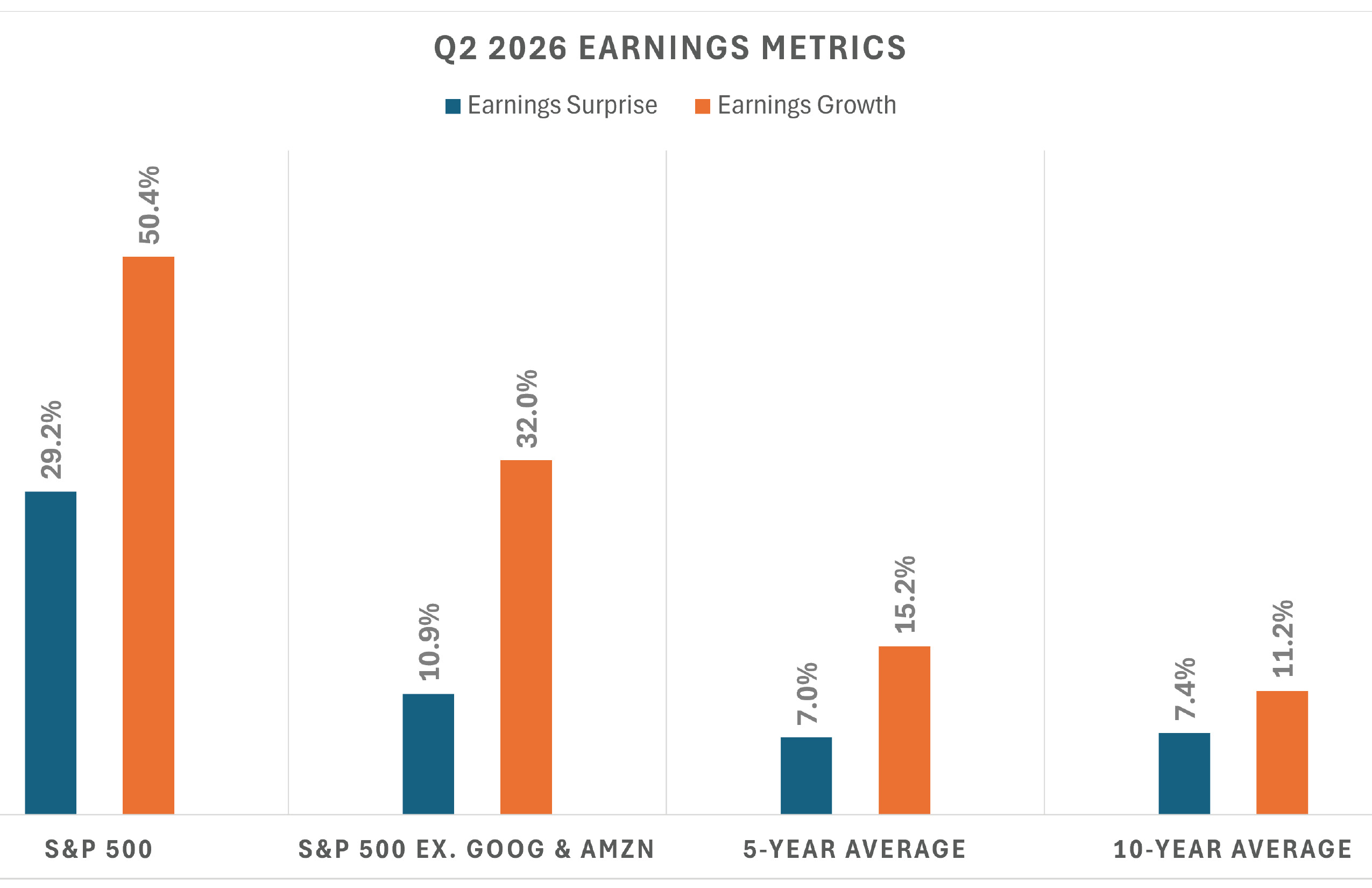
Even after accounting for these factors, corporate profits remain remarkably strong and comfortably above historical averages, as shown below. Perhaps most encouraging is that earnings growth is becoming less concentrated among the Magnificent Seven and AI-related beneficiaries. More companies tied to the broader economy are starting to participate. Businesses such as Wayfair and Disney delivered strong results, suggesting earnings momentum is expanding beyond a handful of mega-cap technology stocks. That's a healthy development and one that should support a more balanced and durable bull market.
Source: FactSet
Investors never run short of things to worry about. Whether it's conflict in the Middle East, speculation surrounding a new Federal Reserve Chair, or an ongoing debate over whether AI enthusiasm has become excessive, the list is always changing. Yet one thing remains remarkably consistent: stocks have a long history of climbing a wall of worry. Strong and resilient corporate earnings continue to provide support for that idea. The headlines may change, but profitable businesses still matter. As always, if you have questions about these developments or what they mean for your portfolio, please reach out to your advisor. Your success matters.